Can Technology Help Us Remember God’s Faithfulness?
Joshua’s memorial stones offer a way to think about the photos, notes, and stories that help us remember God’s faithfulness.
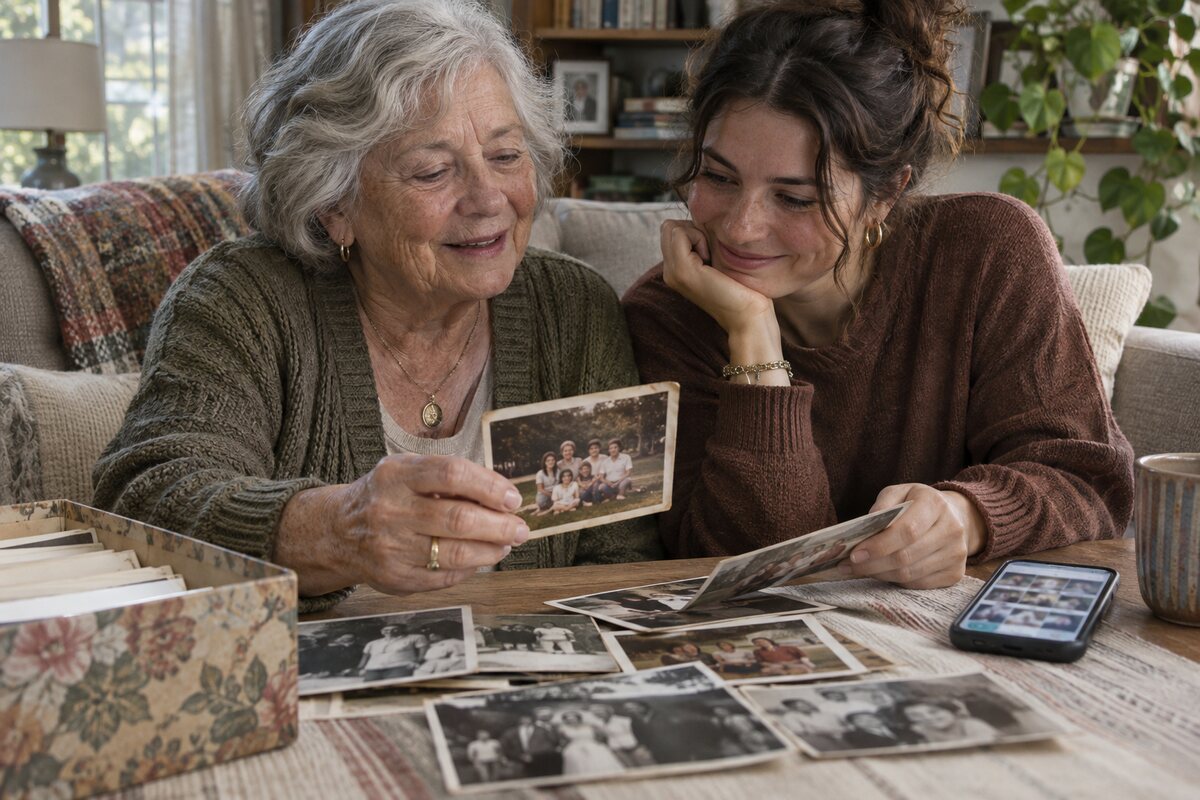
A photo from moving day might show a stack of boxes and a friend holding a roll of packing tape. The photo can tell you when it was taken. It takes a little remembering to recall that your friend showed up early, brought lunch, and stayed until you had somewhere to sit.
A phone can bring that photo back to you years later. What you do with the memory is where the spiritual practice begins.
What the stones were for
In Joshua 4, after Israel crosses the Jordan on dry ground, God tells Joshua to have twelve stones carried out of the river. Joshua explains that when children later ask what the stones mean, the people are to tell them how Israel crossed the Jordan and what God did there (Joshua 4:4–7, 21–24).
There are two parts to that memorial. The stones give the children something to ask about. Someone who knows the story has to tell it.
A photo, a calendar entry, or an old text can bring a story back within reach. A saved message that says “I’m outside” might remind you who came to pick you up on one of the hardest days of your life. You may remember what you prayed for on that day, what stayed difficult, and what it meant to have someone show up anyway.
Save a few words with the memory
If you keep photos or notes on your phone, try adding a sentence to one you already have. Write down a detail your future self could miss.
A picture of an ordinary dinner might carry a note like this: “This was the first evening after the move that I felt at home. We’d been praying to find friends here. I remember how good it felt when they asked if they could come back next week.”
A note can hold an unfinished story, too. “We’re still waiting for news. Today three people checked in, and I had the courage to ask one of them for help.” Years later, that sentence may bring back something the eventual outcome could easily overshadow.
Use a place you already look. A caption, a journal entry, or a note alongside a photo is enough. If the story involves someone else’s private circumstances, you can keep it in your own journal and ask before sharing it.
Tell the story while you remember it
Psalm 77 describes someone in distress who makes a deliberate choice to remember the works of the Lord (Psalm 77:7–12). You can do something similar when an old photo surfaces. Pause and ask what you remember about that season. What were you praying about? Who helped? What can you give thanks for now?
If someone shared that day with you, consider sending them the photo with a line about what you remember. They may recall a detail you’ve forgotten. Or tell the story over dinner, while someone is there to ask the next question.
A photo can take you back to moving day. Telling the story gives you a chance to thank the friend who stayed and to remember what you were praying for when those boxes were still stacked by the door.