Christians Have Always Engaged New Technology — AI Is No Different
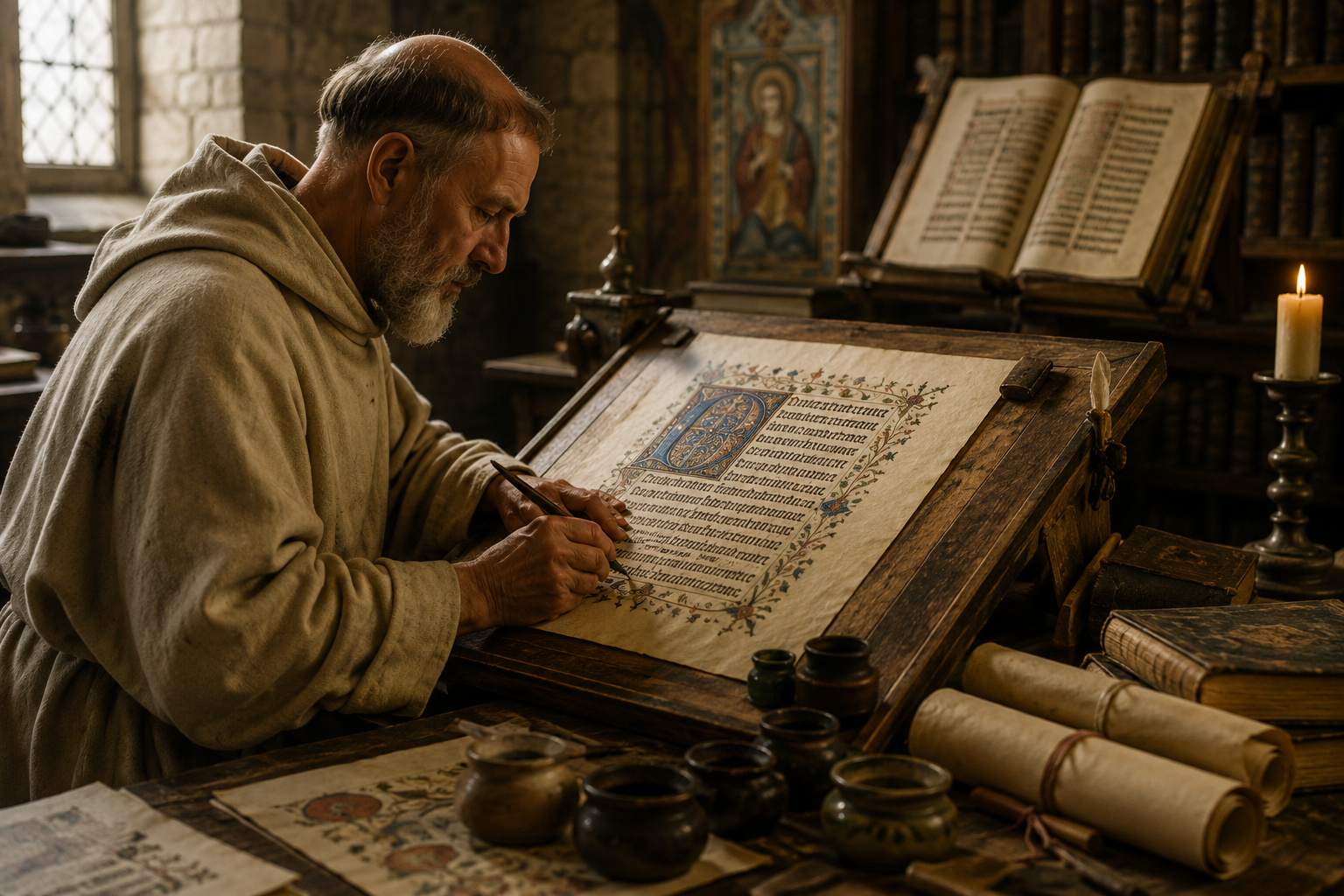
Artificial intelligence has become one of the most debated technologies of our time.
In Christian circles, the conversation often becomes polarized quickly. Some people view AI as a powerful new tool for learning, communication, and ministry. Others see it primarily as a source of misinformation, confusion, and spiritual risk.
Christians have been wrestling with disruptive technologies for centuries. Long before debates about social media, smartphones, and AI, believers were asking difficult questions about how new tools might affect faith, authority, learning, and truth.
One of the clearest examples is the printing press.
The Printing Press Changed Who Could Access Information
Today, many Christians own multiple Bibles.
Some have dozens.
That reality would have been unimaginable for most of Christian history.
Before the printing press spread throughout Europe, books were copied by hand. Producing a Bible required enormous amounts of labor, specialized skill, and money. For many ordinary believers, owning a personal copy of Scripture simply was not realistic.
People encountered Scripture through church services, public readings, teaching, art, music, and community life.
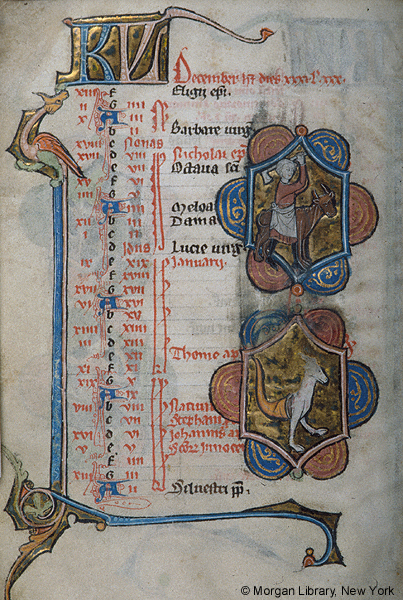
Illuminated manuscripts remind us that books were once copied slowly, carefully, and by hand.
Then the economics changed.
The printing press dramatically reduced the cost of producing books. As books became more affordable, access to information expanded. Literacy became increasingly valuable. Ideas could travel farther and faster than ever before.
The technology did not merely improve publishing.
It changed who could participate in the conversation.
Not Everyone Thought That Was Good News
Looking back from the twenty-first century, it can be tempting to assume everyone should have celebrated these changes.
Many people did.
Others were uneasy.
Some worried that ordinary people would misunderstand Scripture. Others feared that charismatic but poorly informed teachers would spread bad theology. Religious authorities worried about losing control of information that had previously moved through established structures.
Those concerns were not entirely irrational.
The printing press made it easier to distribute truth.
It also made it easier to distribute error.
That distinction matters.
The Printing Press Did Not End the Need for Discernment
Modern discussions sometimes treat the printing press as an obvious and uncomplicated success story.
The reality was messier.
The same technology that printed Bibles also printed political propaganda, theological attacks, conspiracy theories, and misinformation.
Access to information increased.
So did the need for discernment.
Supporters of the printing press saw unprecedented opportunities. Critics saw unprecedented risks.
History suggests both groups identified something real.
The technology expanded access to knowledge.
It also expanded access to confusion.
Why the Reformation Matters
During my studies, church history became one of my favorite subjects, particularly the period from the Protestant Reformation through the First Great Awakening.
One lesson appears repeatedly throughout that era.
Technology changes who gets access to ideas.
The Protestant Reformation was not caused by the printing press. Religious movements are always more complicated than a single invention.
At the same time, it is difficult to imagine the Reformation succeeding without it.
Reformers could distribute sermons, pamphlets, theological arguments, and Bible translations on a scale that would have been impossible a century earlier. Religious debates that once remained local could spread across countries.
For the first time, large numbers of ordinary people could engage directly with ideas that previously circulated among smaller groups of scholars, clergy, and political leaders.
The result was both opportunity and disruption.
Why AI Feels Familiar
Five hundred years later, Christians are having a remarkably similar conversation about artificial intelligence.
The details are different.
The concerns are not.
People worry that AI will spread misinformation. They worry that it will make confident voices appear more knowledgeable than they really are. They worry that it will increase confusion and make it harder to distinguish truth from error.
Those concerns deserve to be taken seriously.
In some ways, they echo the same fears that accompanied earlier communication revolutions.
Who controls information?
Who can publish ideas?
Who can influence large numbers of people?
How do ordinary believers evaluate competing claims?
Those questions did not begin with AI.
Technology Is Usually a Stewardship Question
One reason these debates become difficult is that technology discussions often drift toward extremes.
Some people treat new technologies as inherently good.
Others treat them as inherently dangerous.
History rarely supports either conclusion.
A printing press can distribute a Bible or a conspiracy theory.
A radio can broadcast a sermon or propaganda.
The internet can host educational resources or misinformation.
Artificial intelligence is no different.
Technology does not eliminate human responsibility.
It often magnifies it.
That is why many of the most important questions surrounding AI are actually stewardship questions rather than technology questions.
How should it be used?
What boundaries should exist?
What responsibilities do builders have?
What responsibilities do users have?
Why Christian Participation Matters
Christians have not always agreed about new technologies.
They certainly did not agree about the printing press.
Yet throughout history, believers have repeatedly participated in shaping education, publishing, communication, literacy, universities, hospitals, and scientific inquiry.
More often, the challenge has been learning how to engage technological change faithfully.
That does not mean embracing every trend.
It does not mean rejecting every innovation.
It means asking better questions.
How This Shaped Mat44
Many of these historical lessons influenced the way Mat44 was built.
Not because every concern about AI is overblown.
In fact, some concerns are entirely reasonable.
If people worry about false authority, technology should be designed to avoid creating it.
If people worry about theological confusion, systems should acknowledge their limits.
If people worry about replacing pastors, priests, bishops, and trusted leaders, technology should encourage those relationships rather than compete with them.
Good technology does not eliminate the need for discernment—it increases the importance of it.
Mat44 is designed as a scripture companion, not a spiritual authority. It keeps Scripture distinct from reflection, uses boundaries for sensitive topics, and redirects users toward trusted human leaders when questions move into pastoral or theological territory.
The Real Question
Artificial intelligence will continue developing whether Christians participate or not.
The same was true of the printing press.
The question facing Christians is not whether new technology creates opportunities.
It does.
The question is not whether new technology creates risks.
It does.
The enduring question is whether believers will approach those opportunities and risks with wisdom, humility, and discernment.
History suggests that challenge is not new.
Only the technology is.
Curious how this works in practice?
Try Mat44 and see how Brenda keeps the focus on Scripture, reflection, and trusted human guidance.
Try Mat44