How AI Can Sound Right and Still Be Wrong
A polished AI answer can still contain false quotations, missing context, invented sources, or misleading theological conclusions.
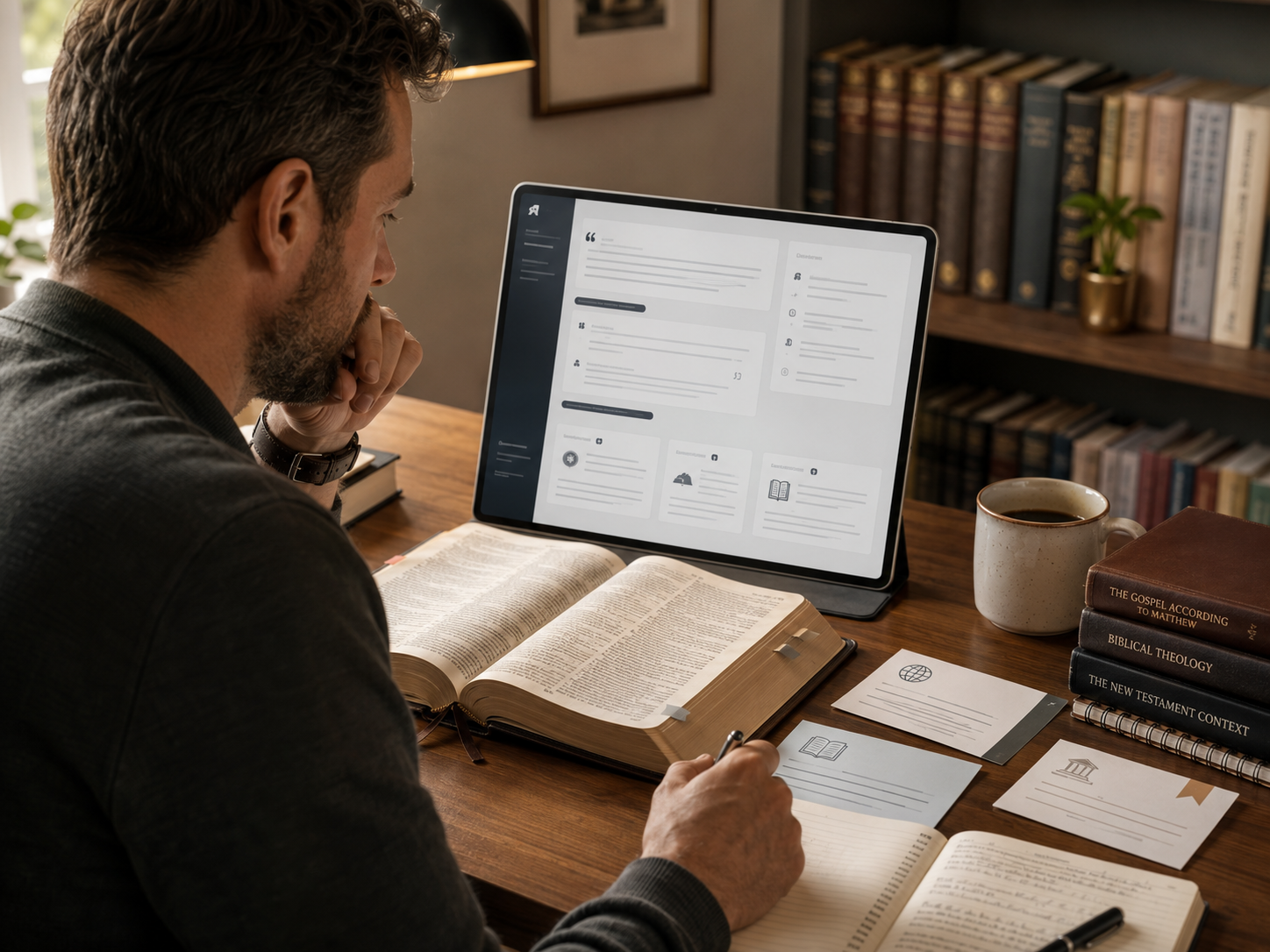
One of the hardest things about evaluating artificial intelligence is that a wrong answer may not look wrong.
It may be grammatically polished.
It may contain headings, examples, historical references, and a calm conclusion.
It may quote a Bible verse, mention an early Christian writer, and explain exactly how the evidence supports its position.
The answer can feel researched even when parts of it were invented.
This is not because AI is deliberately lying. It is because a language model is designed to produce a plausible continuation of the conversation.
Plausible language and verified truth are not the same task.
That distinction becomes especially important when Christians use AI to study Scripture, church history, theology, or personal spiritual questions.
Confidence is a writing style, not evidence
People naturally use tone as a shortcut.
A hesitant speaker may appear less knowledgeable. A confident speaker may appear more credible.
AI benefits from that same assumption.
It can present a weak answer with the voice of a lecturer who has spent thirty years studying the subject.
The sentences arrive without pauses, embarrassment, uncertainty, or visible effort.
But confidence in an AI response is usually a property of the generated language.
It is not proof that the system checked the claim.
A chatbot may sound equally confident while providing:
- An accurate Bible quotation
- A paraphrase presented as a quotation
- A verse with the wrong reference
- A real quotation attributed to the wrong person
- A fabricated book title
- A simplified account of a complex doctrinal dispute
- A conclusion that ignores the strongest opposing evidence
The tone may remain identical in every case.
The answer may combine true pieces incorrectly
Not every AI error is an obvious fabrication.
Some of the most persuasive mistakes are built from information that is mostly true.
The chatbot may identify the correct historical period, mention real people, summarize a genuine controversy, and then connect the facts in a way the evidence does not support.
For example, it might combine:
- A real theological belief
- A real denomination
- A real historical event
- A real Bible passage
Then it may imply a relationship among them that is misleading or false.
Because each individual part appears familiar, the whole answer feels credible.
This is one reason checking a single sentence may not be enough.
The facts may be accurate while the argument connecting them is not.
Scripture references can create borrowed authority
A Bible reference makes an answer feel grounded.
But the presence of a reference does not guarantee that the passage says what the chatbot claims.
The verse may be quoted incompletely.
The translation may be mislabeled.
The passage may address a different problem in its original context.
The chatbot may select one verse that appears to support its answer while ignoring others that complicate the conclusion.
Sometimes the wording may not appear in any recognized translation at all.
That is why faith-focused tools should make biblical verification easy.
The user should be able to see the translation, open the full passage, and distinguish direct Scripture from generated commentary.
A citation should invite verification.
It should not be used as decoration.
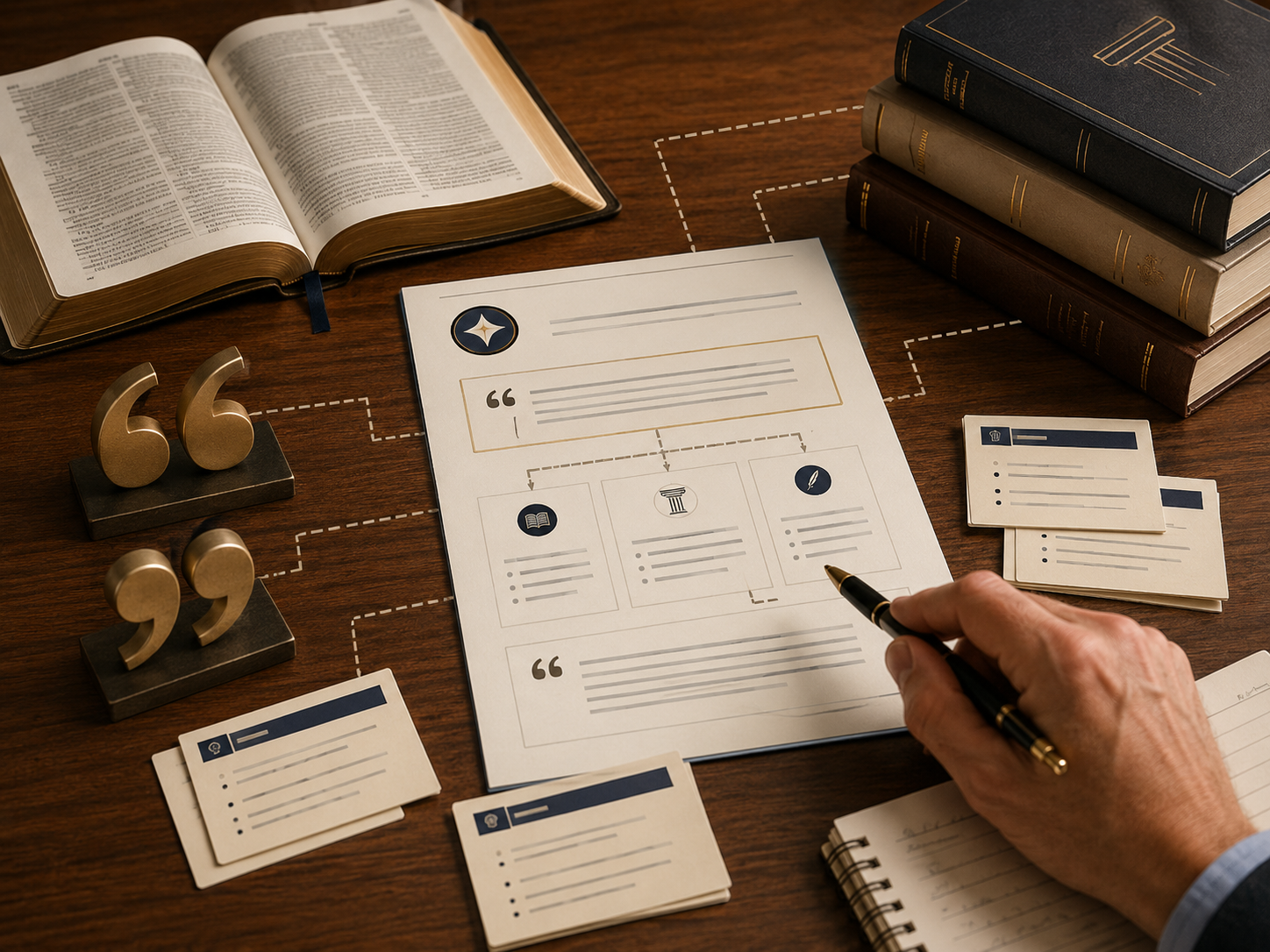
Theological questions expose hidden assumptions
Suppose someone asks, "What does Christianity teach about baptism?"
There is no honest one-paragraph answer that represents every Christian tradition equally.
Christians disagree about infant baptism, believer's baptism, baptismal regeneration, covenant membership, sacramental grace, symbolic obedience, proper mode, and whether baptism is ordinarily necessary for salvation.
An AI system may still produce one smooth answer.
The problem is not necessarily that every sentence is false.
The problem may be that one tradition's framework is being presented as "the Christian answer" without acknowledging the disagreement.
The response sounds right because it is coherent.
It may still be wrong as a representation of Christianity.
Responsible Christian AI should make interpretive boundaries visible.
It should be willing to say, "Christians disagree about this, and here are the major positions."
That is less dramatic than declaring a winner.
It is also more honest.
Fabricated sources are especially dangerous
AI-generated source lists can look convincing.
The names may sound appropriate. The titles may match the subject perfectly. Publication details may appear complete.
Some sources may be real.
Others may be slightly altered.
Others may not exist.
This creates a serious problem for readers who assume that the presence of a citation means the source was actually consulted.
Before relying on an AI-provided source:
- Search for the exact title
- Confirm the author
- Check that the quotation appears in the source
- Verify the publication date and publisher
- Read enough context to understand the author's actual argument
A fabricated citation does more than add a wrong detail.
It creates the appearance of external support for a claim that may have none.
Personal questions make persuasive errors more costly
A mistaken historical date is inconvenient.
A mistaken answer about abuse, marriage, mental health, guilt, church discipline, or divine guidance can cause real harm.
The chatbot may receive only one person's version of events.
It cannot observe the relationship. It may not recognize coercion, danger, manipulation, or missing information.
Yet it can still produce a compassionate and decisive recommendation.
The answer feels safe because it sounds caring.
That is precisely when caution matters most.
A responsible tool should recognize high-stakes questions and narrow its role.
It may help the user identify relevant principles or prepare questions for a trustworthy person.
It should not pretend that a few paragraphs of conversation provide enough information to direct someone's life.
Humans also sound right and remain wrong
This problem is not unique to AI.
Pastors, professors, authors, influencers, and confident strangers on the internet can all present false information persuasively.
Christians should test human teaching too.
The difference is partly scale and speed.
AI can generate a customized, authoritative-sounding answer for millions of people without pausing to reconsider, checking whether it has repeated an error, or bearing responsibility for the result.
It can also adapt its tone to the user.
A person who wants a gentle answer may receive gentleness. A person who wants certainty may receive certainty.
A person who asks a leading question may receive a beautifully written confirmation of the premise built into that question.
That makes ordinary discernment more important, not less.

A practical verification habit
Before accepting an AI-generated faith answer, slow the process down.
First, separate the claims.
What is the answer asserting about Scripture, history, doctrine, or your personal situation?
Second, identify what can be checked.
Open the passage. Search the quotation. Confirm the source. Read an opposing explanation.
Third, notice what cannot be checked quickly.
Claims about God's private intention, another person's motives, or the spiritual meaning of a personal event should be treated with particular caution.
Fourth, ask whether the answer acknowledges uncertainty.
An answer that presents a complicated issue as obvious may be simplifying more than it explains.
Finally, consider who should help carry the question.
Some questions belong in study. Some belong in prayer. Some belong with a pastor, counselor, doctor, attorney, emergency professional, or trusted person who can understand the situation and remain accountable.
The best answer may contain visible limits
People sometimes assume that a trustworthy AI tool will make fewer mistakes because it has been given better instructions.
Good instructions and carefully selected sources can help.
They do not eliminate uncertainty.
A more trustworthy tool is not merely one that produces accurate answers more often.
It is one designed to respond safely when certainty is unavailable.
It should say when it does not know.
It should distinguish quotation from summary.
It should show where interpretations differ.
It should avoid inventing spiritual authority.
It should make verification easier.
It should recognize when the user needs a human being rather than another generated paragraph.
Those limitations may make the tool appear less impressive.
They make it more worthy of trust.
Persuasion is not the same as truth
AI can help Christians locate information, compare perspectives, organize notes, and begin thoughtful reflection.
But the smoothness of an answer should never become the reason we believe it.
Truth does not become more true because it is delivered instantly.
An error does not become safer because it is compassionate.
A theological assumption does not become universal because it is presented without visible disagreement.
The question is not simply, "Does this sound right?"
The better questions are:
- Can I verify it?
- What assumptions is it making?
- What evidence is missing?
- What would someone who disagrees say?
- Is this tool helping me seek truth, or merely giving me the satisfying feeling that the search is over?
Curious how this works in practice?
Try Mat44 and see how Brenda keeps the focus on Scripture, reflection, and careful boundaries.