The Goal Is More Scripture, Not More Screen Time
A Christian Scripture app should help people open the Bible, reflect, pray, and return to daily life rather than making the screen itself the center of their spiritual habit.

Most apps are designed to keep people inside the app.
More taps, longer sessions, more notifications, more streaks, and more frequent returns are treated as evidence that the product is working.
That makes sense for many businesses. Attention is valuable, and a product cannot help anyone if people never use it.
But a Christian Scripture app needs to ask a harder question:
What if success sometimes means the user closes the app?
If technology helps someone open a passage, think carefully about it, pray, and carry that truth into the rest of the day, the tool has done something worthwhile.
It does not need to keep talking.
The goal is more Scripture, not more screen time.
Engagement is not the same as spiritual growth
Digital engagement is easy to measure.
A developer can count sessions, clicks, conversations, reminders, reading streaks, and minutes spent inside an app.
Spiritual growth is not so easily reduced to a dashboard.
An app cannot reliably measure whether someone became more patient with a family member, reconsidered a harmful habit, asked forgiveness, served a neighbor, or brought an important question to a trusted church leader.
It can record that a passage was opened. It cannot fully know what happened between the reader, the text, and God.
That difference matters because measurable activity can quietly become a substitute for the thing the activity was supposed to support.
A long conversation about the Bible is not automatically the same as reading the Bible. A perfect streak is not automatically the same as faithfulness. Returning to an app several times a day is not automatically evidence of a healthy spiritual life.
Engagement may support a good habit, but engagement cannot be the final goal.
The screen should begin the habit, not become the habit
Technology can be genuinely helpful at the beginning of a Scripture habit.
A reminder can interrupt a busy day. A simple reading plan can remove the pressure of deciding where to begin. A thoughtful question can help someone slow down and notice part of a passage they might otherwise skim.
Those are useful functions.
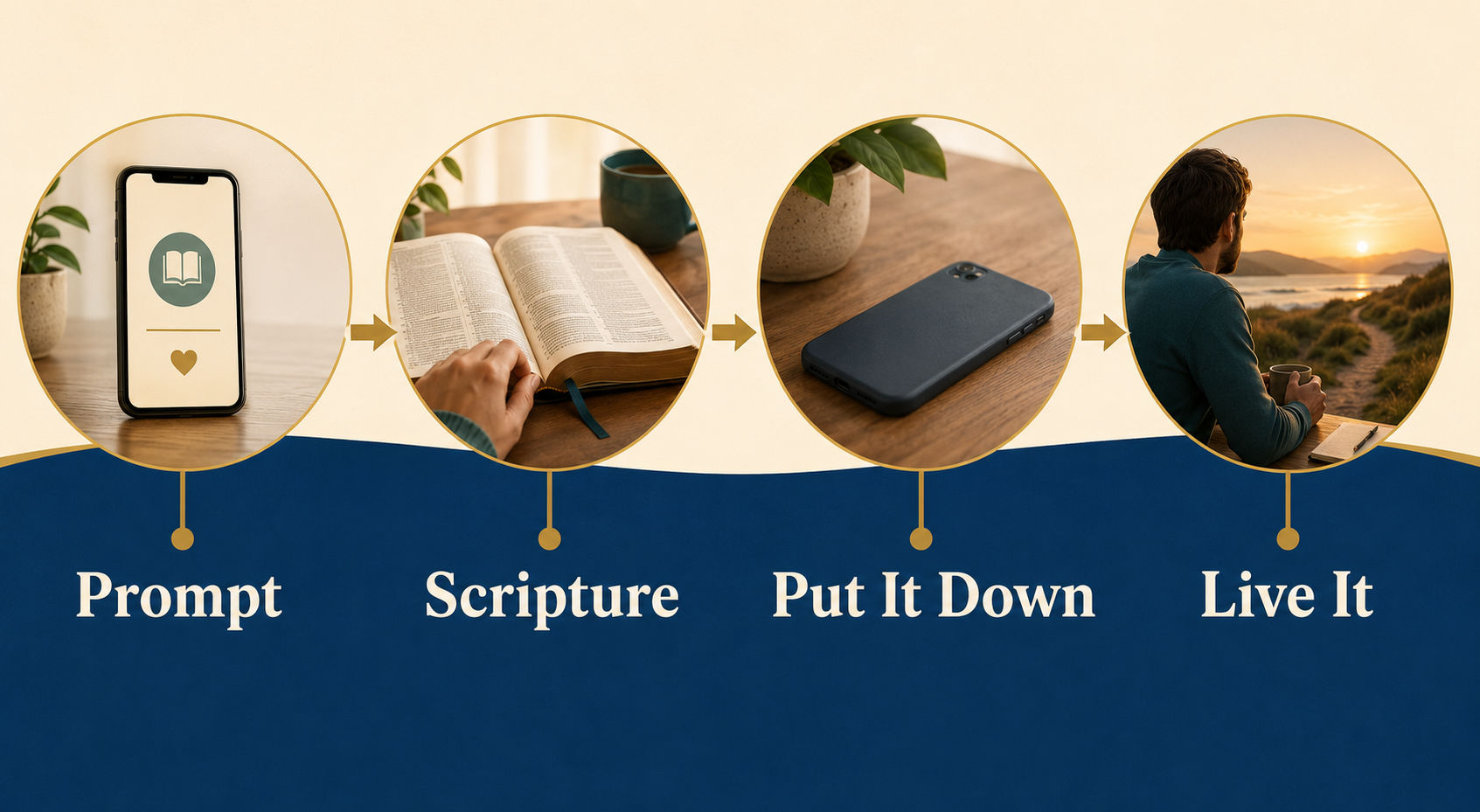
But the healthiest path should continue beyond the screen:
- Receive a prompt.
- Read the Scripture itself.
- Think, write, or pray about what you read.
- Put the phone down.
- Carry the passage into ordinary life.
The phone may open the door, but it should not stand in the doorway demanding more attention.
Good reminders should not create guilt
Reminders can make consistency easier, especially for people whose days are crowded or unpredictable.
But reminders can also become pressure.
A missed day can begin to feel like failure. A broken streak can become more emotionally important than the passage itself. Notifications can turn a spiritual practice into another obligation demanding attention.
Christian technology should be careful about using guilt as a retention strategy.
Missing a notification does not mean someone has disappointed an app, lost all progress, or failed spiritually. People become sick. Families need care. Workdays run long. Routines change. Some seasons are simply harder than others.
A healthy tool can invite someone back without scolding them.
Scripture is still there. Begin again.
AI can make endless engagement especially tempting
Traditional reading apps eventually reach a natural stopping point.
An AI conversation may not.
Every answer can lead to another question. Every explanation can produce another request. Because the system responds immediately, there is always a reason to continue.
That can be useful when someone is studying context or trying to understand a difficult idea. It can also shift attention away from the biblical text and toward the generated conversation.
The assistant may become the most active voice in the experience.
This is one reason Mat44 is built around boundaries. Brenda can support reflection, help users notice themes, and offer context, but she should not behave as though continued conversation is always the best outcome.
Sometimes the most responsible response is brief.
Sometimes the next step is to reread the passage.
Sometimes the user should speak with a pastor, family member, counselor, or trusted friend who knows the situation beyond a single prompt.
And sometimes it is simply time to close the screen.
A Scripture app should point beyond itself
A healthy Christian tool should point toward practices and relationships it cannot replace.
It can encourage reading, but it is not Scripture.
It can offer reflection questions, but it does not pray.
It can explain broad Christian perspectives, but it does not belong to a church community or carry pastoral responsibility.
It can be available at any hour, but availability is not the same as wisdom, authority, or relationship.
Good Christian technology should be comfortable sending attention elsewhere:
- Back to the biblical text.
- Into prayer and quiet reflection.
- Toward a notebook or study resource.
- Into a conversation with a real person.
- Back into family, church, work, service, and rest.
A product does not become less useful because it knows its proper role.
Clear limits can make it more trustworthy.
Design choices reveal the real goal
It is easy to say that an app exists to support Scripture reading.
The design reveals whether that claim is true.
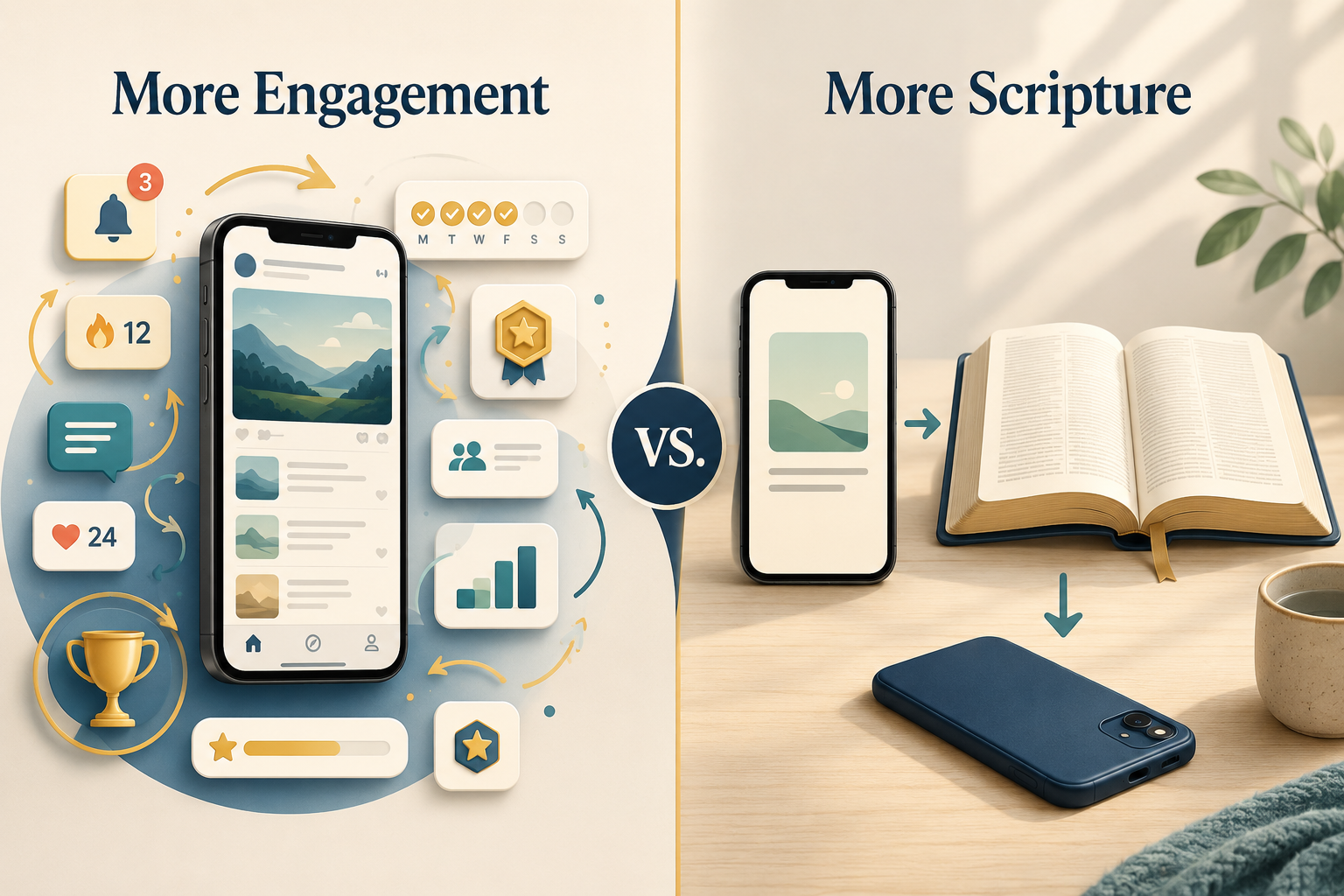
Does the app continually fill the screen with new content? Does it reward longer conversations simply because they are longer? Does it create anxiety about missed days? Does it make the assistant feel more central than the passage?
Or does it make Scripture easy to reach, provide only the support that is needed, and leave room for the user to continue without the technology?
These two approaches can use similar features while producing very different relationships with the user.
What healthy use can look like
Healthy use will not look identical for everyone.
One person may benefit from a daily reminder. Another may use Mat44 only when beginning a new reading plan. Someone else may read inside the app, while another person uses it as a prompt before opening a printed Bible.
The important question is not whether the phone appears in the routine.
The important question is what role it plays.
A few practical questions can help:
- Am I spending more time with Scripture or mainly with generated commentary?
- Can I close the app without feeling anxious or guilty?
- Does this tool support prayer and real community rather than replace them?
- Am I checking important claims against the biblical text?
- Is the habit changing how I live, or only increasing my screen activity?
These questions are not an argument against Christian apps.
They are a way to use them deliberately.
Technology should be willing to become less important
The best tool does not always become the center of the routine it supports.
A map helps someone reach a destination. A reminder helps someone remember what matters. A good guide helps someone look more carefully at something beyond the guide.
Mat44 is meant to serve that kind of role.
The app can make it easier to begin. Brenda can support thoughtful reflection. Carefully designed features can reduce friction and help Scripture reading become more consistent.
But the screen is not the destination.
The healthiest outcome is not that someone needs more and more of the app. It is that Scripture becomes a deeper and more natural part of life.
Open the passage. Read slowly. Think honestly. Pray. Talk with real people. Carry what you read into the day.
Then put the phone down.
Build a Scripture habit without making the screen the center
Try Mat44 and see how Brenda supports Scripture reading, reflection, and careful boundaries while keeping the biblical text at the center.