AI Should Not Be Your Pastor
Artificial intelligence may become a useful part of Christian life. That does not mean it should become a spiritual authority.
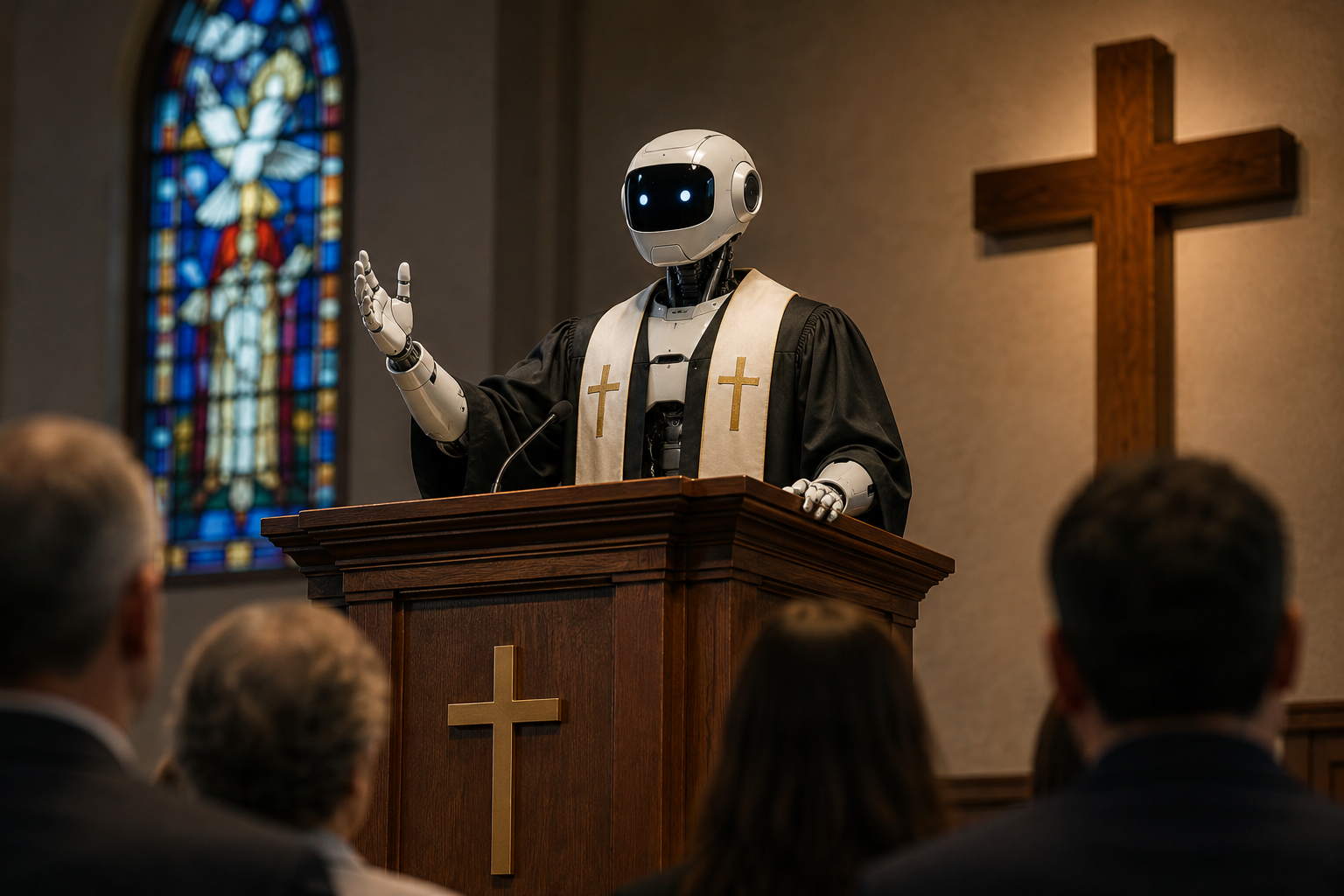
Artificial intelligence is getting surprisingly good at answering questions.
Ask it to summarize a Bible passage, explain a theological term, compare church traditions, or suggest verses related to anxiety, grief, forgiveness, or hope, and many modern AI systems can produce answers in seconds.
For Christians, that creates an obvious question: What role should AI play in our spiritual lives?
The answer is probably not “none.”
But it also should not be “everything.”
The problem is not that AI exists. The problem is forgetting what AI actually is.
AI can organize information. It can summarize. It can retrieve facts. It can help someone find a verse they have forgotten. It can even help people engage with Scripture more consistently.
What it cannot do is become a pastor, priest, bishop, elder, mentor, or trusted spiritual friend.
Those roles require something technology cannot provide: wisdom, accountability, community, and lived experience.
Information Is Not the Same Thing as Spiritual Authority
One of the easiest mistakes to make with modern technology is assuming that access to information is the same thing as wisdom.
It isn’t.
A person can own an entire theological library and still need guidance.
A person can read every article ever written about marriage and still need a trusted mentor.
A person can ask an AI a hundred questions about faith and still need a local church community.
Christianity has always been more than information transfer.
It is a lived faith practiced among real people.
That is why pastors, priests, bishops, elders, and spiritual mentors exist in the first place.
Their role is not merely to provide information. Their role is to help people apply truth in real situations with care, accountability, and context.
No language model can do that.
Christianity Has Always Been Relational
This is not a new idea.
From the earliest churches described in the New Testament, Christianity has been deeply relational. Believers gathered together. They worshiped together. They learned together. They carried one another’s burdens and held one another accountable.
The Christian faith has always involved more than simply acquiring knowledge.
It involves encouragement, correction, service, sacrifice, forgiveness, and community.
None of those things happen because someone read the right information.
They happen because people are involved in one another’s lives.
That distinction matters because AI can deliver information remarkably well. What it cannot do is participate in Christian community.
The Real Risk Is Dependency
The biggest concern with AI is not that it will suddenly become a false prophet.
The bigger concern is that people may slowly begin treating it like a substitute for human relationships.
A machine is available 24 hours a day.
It never gets tired.
It never disagrees emotionally.
It never asks to reschedule a meeting.
It never has a bad day.
That convenience can feel attractive.
But convenience is not the same thing as discipleship.
The Christian life has always involved real people, real conversations, and real accountability.
Technology can support those things.
It cannot replace them.
Information Can Sound Like Authority
One of the challenges with modern AI is that information often sounds authoritative.
AI responds quickly. It speaks confidently. It explains complex ideas in a calm, organized manner.
Those qualities make it useful.
They can also make it persuasive.
When the topic is weather, grammar, or historical facts, that confidence may not matter very much.
When the topic is doctrine, repentance, suffering, marriage, grief, calling, or major life decisions, confidence can easily be mistaken for authority.
The important question is not whether the answer sounds thoughtful.
The important question is whether the source has any rightful authority in a person’s life.
A pastor, priest, bishop, elder, mentor, or trusted spiritual leader exists inside a relationship.
AI does not.
A Good Test
There is a simple question Christians can ask themselves.
If this AI disappeared tomorrow, what would happen?
Would you still pray? Would you still read Scripture? Would you still attend church? Would you still seek counsel from trusted believers?
If the answer is yes, then the technology is likely serving a healthy role.
If the answer is no, something may be out of balance.
Tools should support spiritual life.
They should not become the foundation of it.
Good Christian AI Should Redirect, Not Replace
One useful way to evaluate a Christian AI tool is to ask another simple question: What happens when the conversation reaches something important?
Does the system encourage dependency?
Does it pretend to have authority?
Does it make decisions for the user?
Or does it recognize its limits?
The healthiest systems should be willing to say things like: “You may want to speak with your pastor, priest, bishop, or trusted spiritual leader about this.”
That is not a weakness.
That is a sign that the system understands its role.
A calculator is not less useful because it cannot perform surgery.
A map is not less useful because it cannot drive a car.
Likewise, an AI assistant is not less useful because it cannot provide spiritual authority.
Where AI Can Actually Help
Used appropriately, AI can still be valuable.
It can help people find passages related to a topic.
It can explain historical background.
It can assist with Bible study organization.
It can help people build a daily Scripture habit.
It can make large amounts of information more accessible.
Those are meaningful benefits.
The key is remembering that these tools work best as assistants, not authorities.
Why Boundaries Matter
One of the biggest misunderstandings in AI discussions is the difference between a prompt and a guardrail.
A prompt is a request.
A guardrail is a boundary.
Those are not the same thing.
A prompt might ask an AI to be careful when discussing spiritual matters. A guardrail limits what the system can do regardless of what the user asks.
That distinction becomes especially important when discussing faith, doctrine, prayer, and major life decisions. A system that merely asks AI to behave responsibly is very different from a system that intentionally prevents certain kinds of behavior.
If you’d like to learn more about the difference between prompts and guardrails, see Prompts vs. Guardrails: What Christians Should Know About AI Safety .
Technology Has a Place — and So Do People
Christians have adopted many forms of technology throughout history.
Printing presses made Scripture more accessible.
Radio and television expanded teaching ministries.
The internet connected churches and communities around the world.
Artificial intelligence will likely become another tool in that long history.
But tools work best when their purpose is clear.
AI can help people engage with Scripture.
It can help organize information.
It can help answer questions.
What it should never do is replace the role of pastors, priests, bishops, mentors, families, churches, and communities.
Those relationships remain irreplaceable.
And that’s exactly how it should be.
Curious how this works in practice?
Try Mat44 and see how Brenda keeps the focus on Scripture, reflection, and trusted human guidance.
Try Mat44